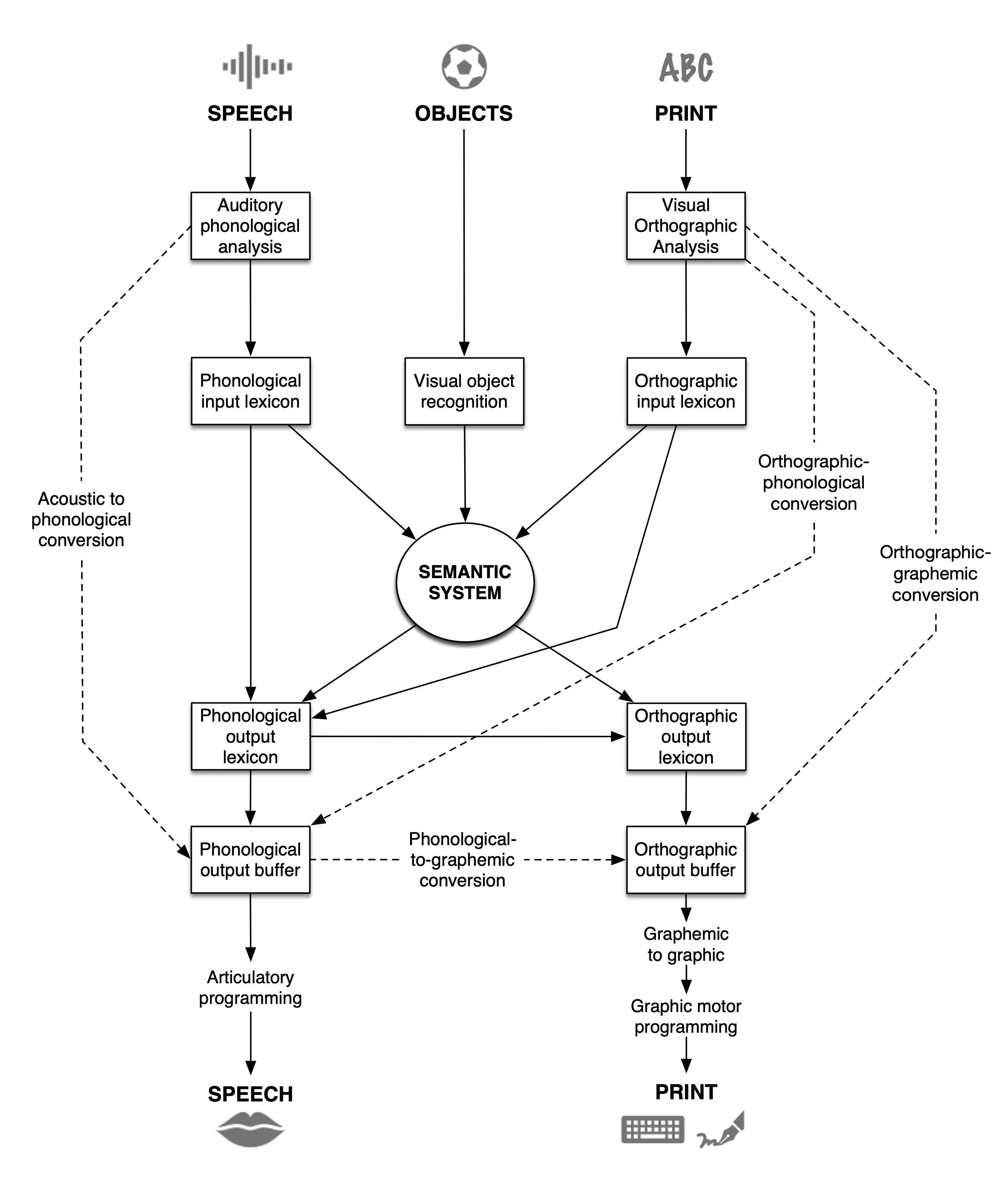
PALPA Tutorials - Step-by-step video explanations of the psycholinguistic model

John E. Pierce

A series of step-by-step video explanations for speech pathologists of the psycholinguistic model of language processing and aphasia.
These tutorials build understanding of this complex model with videos on normal language processing, breakdowns (i.e. aphasia) and assessment. They include quiz questions at the end to test your knowledge.
Best viewed in order!
View all videos on YouTube
PALPA tutorial thumbnails

About the Psycholinguistic Model
These models are one way of understanding single word language processing and aphasia. Widely used in the UK and Australia, this model is the basis of the Psycholinguistic Assessments of Language Processing in Aphasia (PALPA), a comprehensive assessment battery that helps clinicians identify the specific nature of language processing impairments in people with aphasia. Although they do have limitations, psycholinguistic models assist with interpretation of assessment results and treatment planning.

Video 1: Overview of Psycholinguistic Models, Pros and Cons

(Coming soon)

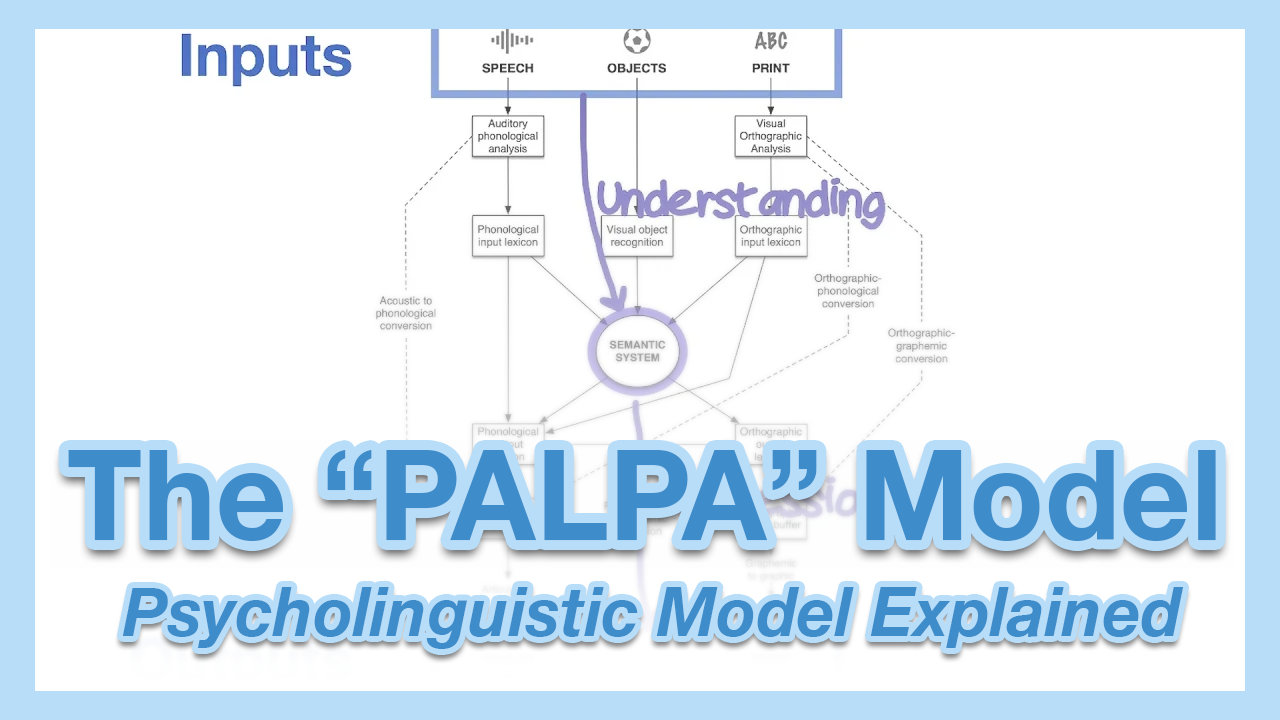
Video 2: The "PALPA Model" Explained - Normal Language Processing in Psycholinguistics

Orientation to the model, how each box functions in an unimpaired system.
Watch on YouTube Download Notes page

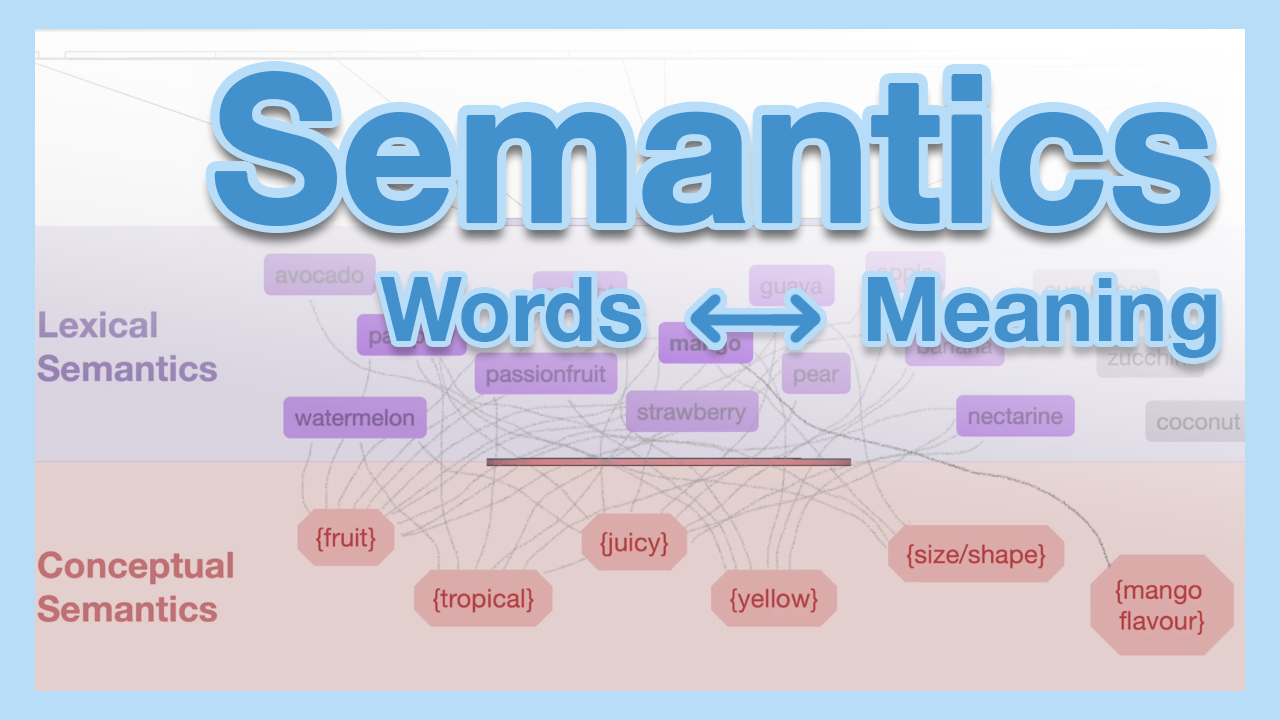
Video 3: Semantics in the PALPA Model - what do we mean by "semantics"?

In-depth explanation of the semantic system, how the brain organises conceptual knowledge and maps it to words.
Watch on YouTube Download Notes page

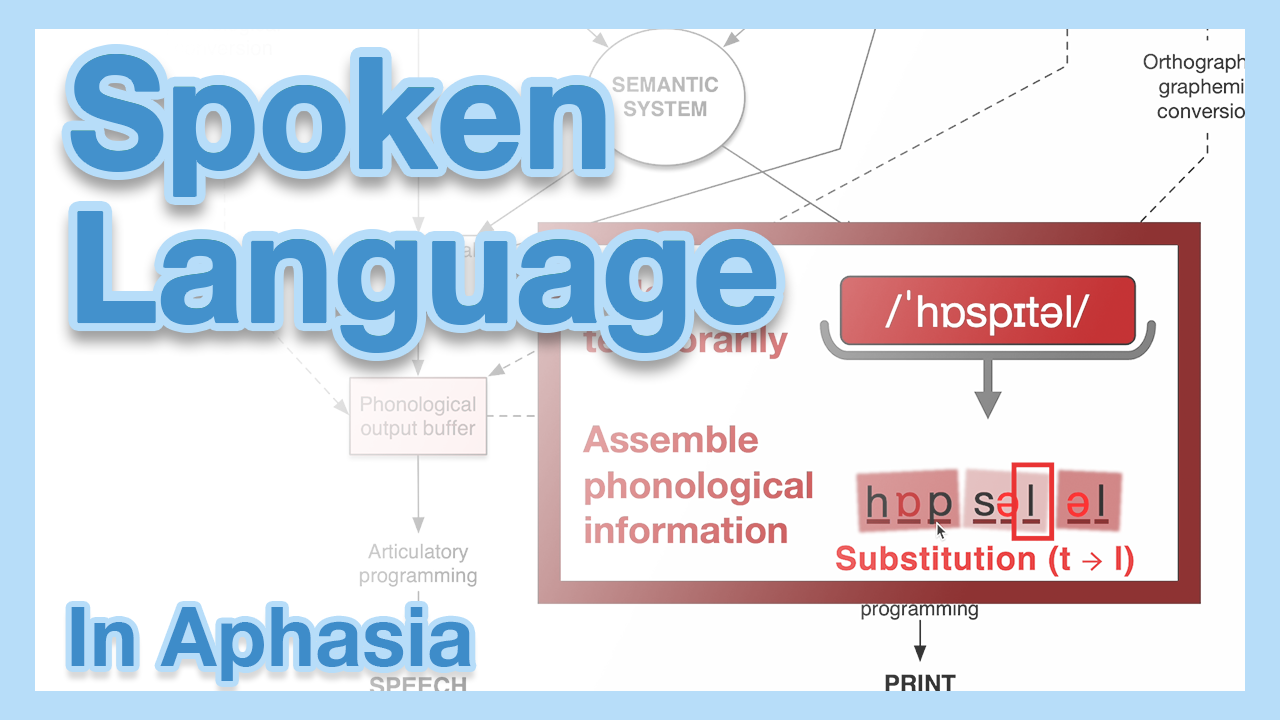
Video 4: Breakdowns in Speech & Auditory Comprehension

The effects of impairments to each process on the spoken comprehension and expression side of the model.
Watch on YouTube Download Notes Page (Videos 4-5)

Video 5: Breakdowns in Reading and Writing

The effects of impairments to each process on the reading and writing side of the model.
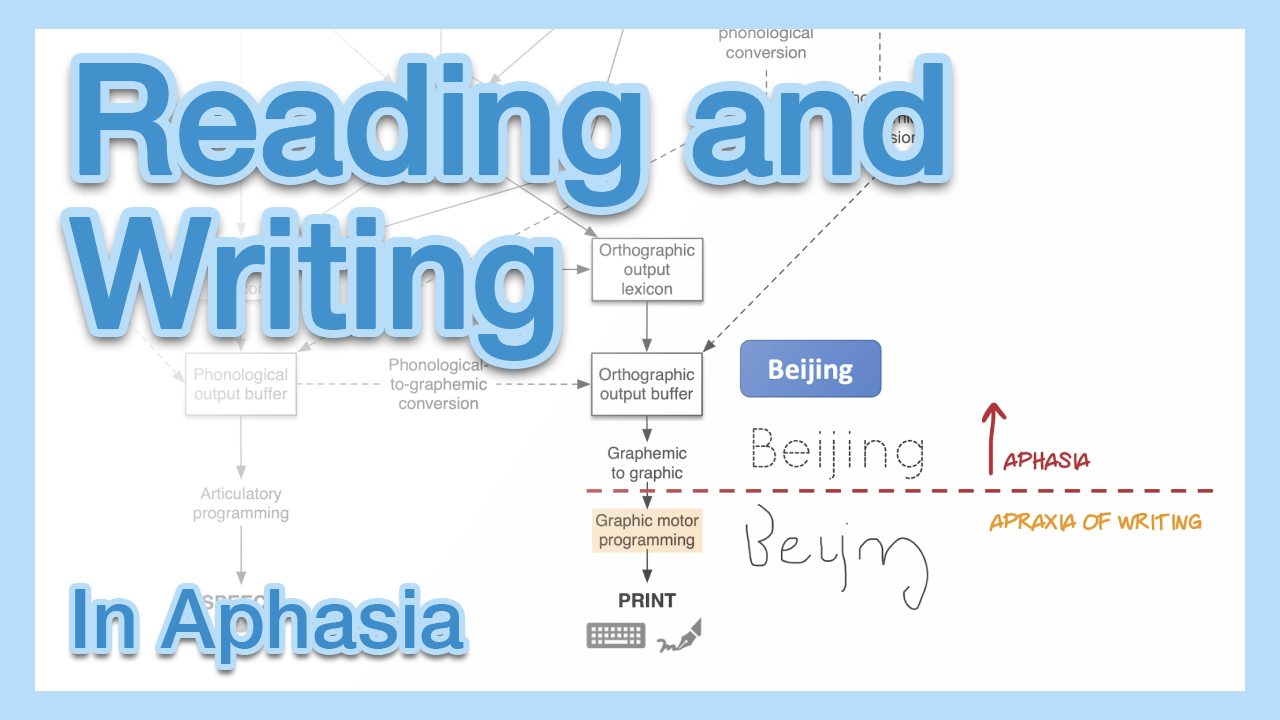
Watch on YouTube Download Notes Page (Videos 4-5)

Video 6: Assessment using psycholinguistic models

(Coming soon)